
Brass Bands competing at the World Music Contest
By Dr. Jonathan Henneveld
In the weekend of July 11-12, brass bands of the British tradition came to Kerkrade, the Netherlands, to compete at the World Music Contest. The twenty-eight bands performed such diverse programs, all highlighting their individual strengths and musical identities. As a listener, the weekend was inspiring and motivating, only topped by getting to hear some of the world’s best bands.
Besides getting to hear these top bands, it was great to see Marshall Gilkes on the stage playing his Sin Filtro with the Five Lakes Silver Band (FLSB), conducted by Christopher Ward. They furthermore performed the Leviathan by Paul Lovatt-Cooper, The Lost Circle by Jan van der Roost, and the mandatory piece Mirage by the new WMC Ambassador, Jan de Haan.
After their performance, I had the pleasure to talk with both Mr. Gilkes and Mr. Ward about their experiences over the weekend and with the brass band tradition.
A crash course in brass banding
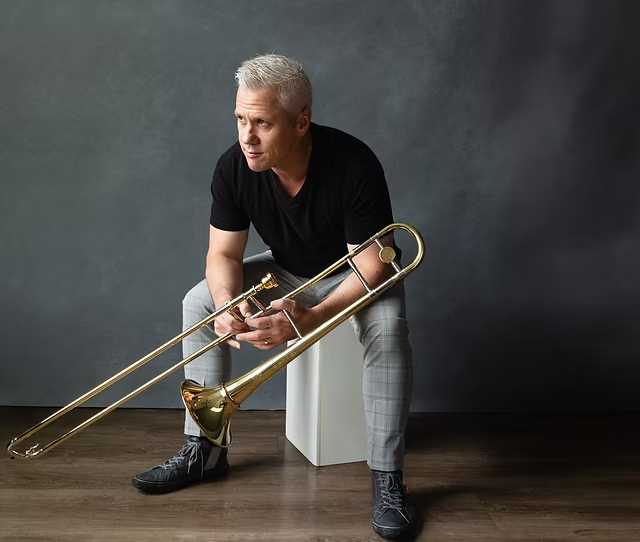
For Marshall Gilkes, one of the world’s leading jazz and classical trombonists, the British-style brass band world wasn’t always familiar territory.
“Up until about twelve years ago, I had no idea what a brass band was,” he laughs.
His introduction came through Brass Band Battle Creek after legendary trombonist Joe Alessi connected the two. That first experience quickly grew into lasting relationships within the brass band community, leading Gilkes to compose works for the ensemble and join as a featured soloist.
Last summer, he performed Johan de Meij’s T-Bone Concerto with the Salvation Army Central Music camp’s Staff Band, bringing his quartet along for the occasion. This year’s WMC appearance came together almost unexpectedly.
“Chris invited me back, and it all worked out.”
The whirlwind schedule has reflected the scale of the project. Gilkes flew to Detroit on Monday for rehearsals before the ensemble travelled to the Netherlands on Thursday in preparation for the weekend’s competition.
Discovering the brass band community
One aspect of brass banding continues to surprise Gilkes.
“Most of these players are amateurs,” he says, “but they play at, or even above, the level of many professionals.”
That dedication has left a lasting impression.
“I’m surprised it’s not a bigger thing. It’s emotionally more impactful than many people realise.”
Coming from the orchestral and jazz worlds, Gilkes has also noticed how uniquely connected the brass band community is.
“Everyone, even the fans, knows who plays in the top bands. It’s a small community.”
That sense of belonging resonates personally. His father played euphonium with the United States Air Force, giving Gilkes an early appreciation for the traditions and camaraderie that define brass bands.
By now, he says, the experience has become a true immersion.
“It’s been a crash course in brassbanding.”
Yet despite his international reputation, Gilkes insists he’s simply part of the team.
“I’m also just a player. I’m a yes-person.”
The details behind the performance
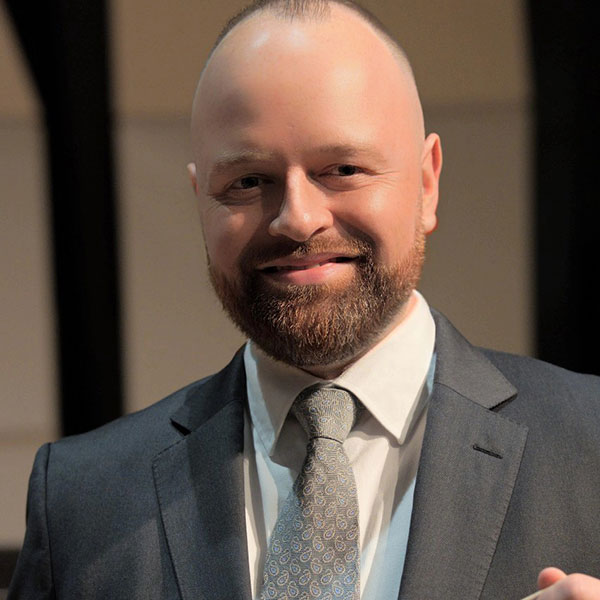
conductor of the Five Lakes Silver Band
Preparation at this level is exhaustive, but routine provides stability. Competition weekends follow familiar patterns, including the band’s traditional warm-up chorale, Deep Harmony, which is played extensively in the week leading up to the contest.
Gilkes explains that his own preparation centres on fundamentals.
“My focus is on breathing.”
Shared breathing, he says, helps the ensemble stay together naturally while allowing the music to remain transparent and expressive.
“When you hear high-level bands, everything is technically locked, but there’s still transparency and musicality.”
The program also includes Sin Filtro, a work originally written for studio recording that now finds a natural place in the live contest set.
“It’s different for the band,” Ward explains, “but it fits the program really well.”
The collaboration itself has been remarkably straightforward.
“Good communication makes things easy.”
More than a guest soloist
Although WMC regulations encourage bands to feature an external soloist, Gilkes’ role extends beyond simply stepping into the spotlight.
Ward jokes that once Gilkes begins playing, his own responsibility becomes relatively simple.
“Marshall is the showstopper,” he laughs. “I just have to keep the band together and smile.”
For Gilkes, however, the competition isn’t about individual recognition.
The last time he competed was as a 22-year-old. Decades later, the focus feels very different.
Instead of chasing perfection, he emphasises attention to detail while never losing sight of musical expression.
Consistency, he believes, is something both classical and jazz musicians can continue to learn from one another. Classical performers can embrace greater freedom, while jazz musicians can benefit from greater consistency in pitch and ensemble precision.
Effort. Attitude. Community.
As performance time approaches, both musicians return repeatedly to the same themes.
“In a competition, we have no control over what the adjudicators decide, so we have to let that go and focus on the things we can control which is our effort and our attitude”
Rather than obsessing over mistakes, he encourages the band to focus being better each time they are together. “Each rehearsal, performance or contest needs to be better than the last. This way we’re not trying to flick a magic switch; it’s the same goal every week.”
“No performance is perfect, but a performance can be perfect for that moment”
Gilkes has been struck by the commitment and pride every member has for the band.
“In the professional world, there’s often too much ‘me, me, me.'”
His advice is simple.
“Check your ego at the door.”
That philosophy, he says, is one of the defining strengths of brassbanding.
“They’re a community, and proud to wear the band’s gear!”
Ultimately, that may be what makes this weekend’s WMC performances special. Beyond the demanding test pieces, the virtuoso soloists, and months of preparation lies something less tangible but equally powerful: camaraderie.
It’s a quality that cannot be judged on a score sheet, yet one that may well define Brass Bands’ journey in Kerkrade.
Though ignored by academia and championed by communities, the enduring tradition of brass bands continues to live on.